top of page

Women List

Available

Vinnie Ream

1847–1914

The first woman commissioned to create a U.S. national monument - breaking into the federal machinery that decides who is immortalized.

Vinnie Ream was still a teenager when she entered the highest corridors of American power — not as a visitor, but as an artist seeking authorship over national memory.

At 18, she secured sittings with President Abraham Lincoln inside the White House, sculpting from life just months before his assassination. Those observations would later shape the work that defined her legacy.

In 1866, she became the first woman — and youngest artist — commissioned by the U.S. government to create a major national monument: the statue of Lincoln for the Capitol Rotunda. Monumental sculpture was how nations fixed their heroes in public consciousness. To hold that commission was to shape how history would be seen for generations.

Her selection was met with resistance. Established male sculptors and political figures questioned her qualifications, her age, and even her presence in the field. Congressional debates threatened to strip her funding. Ream was forced to defend her legitimacy in a system that had never intended to grant her entry.

She completed the statue regardless.

Installed in 1871, her Lincoln still stands at the symbolic center of American governance — a permanent record not only of a president, but of the moment a woman claimed authority in deciding how a nation remembers itself.

Available

Anne Truitt

1921–2004

Transformed Minimalism from industrial abstraction into a language of lived experience.

Anne Truitt didn’t stand outside Minimalism in opposition. She reshaped it from within - altering how the movement could hold human experience without losing its edge.

At a time when Minimalism was defined by industrial materials, factory fabrication, and emotional detachment, Truitt worked differently. From her studio in Washington, D.C., she built tall wooden columns by hand - sanding, painting, and layering pigment until color carried depth rather than surface.

Her sculptures look austere at first glance - geometric, restrained, disciplined. But they were rooted in memory: childhood streets, Southern horizons, the psychological imprint of landscape and distance. She treated abstraction not as removal of feeling, but as a way to distill it.

In a movement dominated by men working in steel and plexiglass, Truitt insisted that handcraft, interiority, and lived experience belonged inside the language of modern art - not outside it.

Critics and fellow artists began to recognize that her work expanded Minimalism’s emotional range without weakening its rigor. Museums collected her columns not as deviations from the movement, but as evolutions of it.

Her sculptures don’t declare themselves loudly. They hold presence quietly - asking viewers to slow down, stand still, and feel what geometry can carry when memory is allowed inside the form.

Available

Inge Lehmann

1888–1993

Discovered Earth’s solid inner core — revealing the hidden structure of the planet itself.

Inge Lehmann was the seismologist who discovered that Earth has a solid inner core — a finding that permanently reshaped planetary science and our understanding of how the planet is formed.

Working in Denmark in the early 20th century, Lehmann analyzed seismic waves produced by earthquakes — vibrations that travel through the Earth’s interior. At the time, scientists believed the planet’s core was entirely molten. But Lehmann noticed irregularities in how certain waves bent, slowed, and reappeared — patterns that didn’t align with existing models.

In 1936, she proposed a radical correction: inside the liquid outer core sat a second, solid center. A core within the core. Her interpretation solved long-standing inconsistencies in earthquake data and became foundational to modern geophysics, influencing everything from tectonic theory to planetary formation studies.

She never stood at the Earth’s core, never drilled toward it, never saw it directly. Everything she revealed came from interpretation — from reading the planet the way others read texts.

With limited tools and little public recognition, Lehmann reconstructed the structure of the world beneath our feet — expanding human knowledge not by going deeper physically, but by thinking deeper scientifically.

Available

Margaret Bourke-White

1904–1971

The first accredited female war photographer on the front lines — turning conflict into public witness.

Margaret Bourke-White was a pioneering photojournalist who was at the center of the 20th century’s most consequential events - documenting power, conflict, and human survival from inside the environments where they unfolded.

As one of the first photographers for Life magazine, she helped define the modern photo-essay, using images not as illustration but as primary record. Her assignments took her into industrial plants, disaster zones, and war theaters - paces rarely accessible to women journalists at the time.

During World War II, Bourke-White became the first accredited female photographer permitted to work in active combat zones. She flew on bombing missions, traveled with advancing troops, and documented the liberation of Nazi concentration camps.

Her lens also turned toward the United States, where she photographed segregation, labor inequity, and Depression-era poverty. Images such as her documentation of Black flood survivors beneath idealized advertising billboards exposed the stark contradictions between American prosperity narratives and lived reality.

Whether capturing Mahatma Gandhi at his spinning wheel, Soviet industrial expansion, or apartheid-era South Africa, she stood where events were unfolding and recorded what others might never have witnessed firsthand.

Available

Fatima al-Fihri

c. 800–880 CE

Built the world’s first continuously operating university — creating the blueprint for modern higher education.

Fatima al-Fihri was an educational founder and philanthropist who established one of the most enduring institutions in global intellectual history.

In 859 CE, she founded the University of al-Qarawiyyin in Fez, Morocco — widely recognized as the world’s oldest continually operating, degree-granting university. Created through her personal inheritance, the institution was designed as a center for advanced study in theology, law, mathematics, astronomy, and language.

Its academic structures helped shape the architecture of higher education. Systems such as issuing formal degrees, requiring scholarly defense of work, and the ceremonial use of academic robes and tassels emerged within its traditions and later influenced European university models.

al-Fihri’s foundation became a cross-cultural knowledge center, drawing scholars from across the Islamic world, North Africa, and eventually Europe. The institution played a key role in preserving and transmitting scientific, philosophical, and legal scholarship across centuries.

Her legacy resides not only in founding a place of learning, but in establishing an educational system durable enough to influence how universities function to this day.

Available

Hypatia of Alexandria

c. 350–415 CE

Director of the world’s most advanced knowledge hub - safeguarding science during civilizational instability.

Hypatia of Alexandria was a mathematician, astronomer, and philosopher who led the Neoplatonic school of Alexandria — one of the most advanced centers of learning in the ancient world.

Students traveled across the Roman Empire to study under her, drawn by her command of mathematics, celestial science, and philosophical reasoning. In an era when women were rarely granted intellectual authority, Hypatia stood at the center of scholarly life — teaching, advising, and shaping scientific thought.

Her most enduring contribution was the preservation and clarification of complex mathematical knowledge. Through her work on texts like Diophantus’s Arithmetica and Apollonius’s Conics, she helped safeguard advanced geometry and algebraic theory at a time when political and religious upheaval threatened the survival of classical scholarship.

That preserved knowledge did not remain in Alexandria. It moved forward — studied by Islamic scholars and later reentering Europe, where it helped inform the scientific developments of the Renaissance.

Hypatia also refined scientific instruments, including the astrolabe, used to map the stars, and the hydrometer, designed to measure liquid density — reinforcing her role in both theoretical and applied science.

Her legacy lies not only in what she discovered, but in what she ensured the world would not lose.

Available

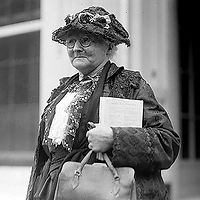
Belva Lockwood

1830–1917

Opened the Supreme Court to women — and became the first to argue there.

Belva Lockwood was an attorney and political activist who dismantled legal barriers that had long excluded women from the American justice system.

Denied entry to the bar despite completing her legal education, Lockwood lobbied Congress directly — successfully securing legislation in 1879 that allowed qualified women to practice before the U.S. Supreme Court. That same year, she became the first woman admitted to argue cases at the nation’s highest judicial level, stepping into a chamber that had been structurally closed to her sex.

Her legal career extended beyond symbolic entry. In 1906, Lockwood represented the Cherokee Nation before the Supreme Court, winning a $5 million settlement for unpaid treaty obligations — one of the largest Indigenous claims victories of its era.

She also worked to codify economic equity within federal employment, drafting and campaigning for legislation passed in 1872 that mandated equal pay for equal work for female government employees — an early statutory challenge to gendered wage disparity.

Lockwood’s career redrew the operational boundaries of American law, establishing women not only as participants in the legal system, but as advocates capable of shaping its outcomes.

Available

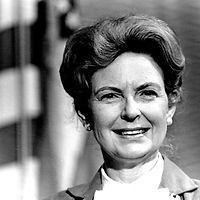
Phyllis Schlafly

1924-2016

]\

Phyllis Schlafly was a constitutional lawyer and political strategist who became one of the most influential organizers in modern American conservatism.

In the 1970s, she led a national campaign opposing the Equal Rights Amendment, transforming what had been positioned as a constitutional formality into a defining political battle. Through disciplined grassroots organizing, she built a coalition of predominantly middle-class women who argued that federal gender equality legislation threatened family structures, state authority, and religious autonomy.

Schlafly’s operational model was expansive and methodical. She mobilized supporters through church networks, local chapters, newsletters, radio broadcasts, and national speaking tours — constructing a communications and organizing infrastructure that moved fluidly between community spaces and legislative arenas. Her campaign played a decisive role in preventing the ERA’s ratification.

Her influence extended well beyond a single issue. Schlafly helped shape the ideological and electoral architecture of the New Right, influencing party alignment, policy priorities, and political messaging across the late 20th century.

Her legacy resides in the machinery she built — and in demonstrating that women’s political organizing power could redirect national policy at scale.

Available

Margarete Schütte-Lihotzky

(1897-2000)

Designed the first modern kitchen, treating domestic labor as work worthy of design.

Margarete Schütte-Lihotzky was an architect who believed the built world could change how people lived — not symbolically, but physically, daily, and at scale.

Working within early public housing movements in the 1920s, she approached domestic space with the same rigor engineers applied to factories. Her Frankfurt Kitchen compressed cooking, storage, and cleaning into a tightly organized system designed to save time, reduce strain, and modernize household labor. It wasn’t decorative — it was infrastructural. The design became the prototype for the modern fitted kitchen and reshaped housing standards across Europe.

Schütte-Lihotzky saw architecture as inseparable from social conditions. Housing, labor, and political systems were part of the same structure. When fascism began dismantling the civic frameworks she had spent her career building, she joined the anti-Nazi resistance — not as a symbolic act, but as an extension of her belief that design and democracy were intertwined. She was arrested and imprisoned for her role.

She didn’t just design rooms.
She designed systems meant to support human dignity.

Available

Trota of Salerno

(11th-12th c)

Authored foundational writings on gynecological medicine then the texts were re-attributed to men.

Trota of Salerno was a physician practicing in 12th-century Italy at the medical school of Salerno — one of medieval Europe’s most advanced centers of medical learning.

While much of medicine at the time relied on inherited theory, superstition, or religious interpretation, Trota wrote from clinical observation and patient care. Her texts addressed menstruation, fertility, childbirth, contraception, and women’s general health with a level of specificity and practical guidance rare for the period. She treated women as medical subjects deserving study, diagnosis, and treatment — not abstraction.

Her writings were compiled into what became known as the Trotula, a widely circulated body of medical texts on women’s health used by physicians and midwives across Europe for centuries. The work helped standardize gynecological knowledge and shaped medical practice well into the early modern era.

Trota’s authority was so widely accepted that her work endured long after her name did.

Available

Evelyn Berezin

(1925-2018)

Invented the first computerized word processor. then her innovation was filed as clerical.

Evelyn Berezin was a computer engineer working in an era when computers solved equations — not sentences — and writing lived entirely on paper.

In the 1960s, she began building systems that allowed text to exist inside a machine. At Redactron Corporation, where she later became president, she led the creation of the Data Secretary — the first computerized word processor. For the first time, a document could be edited without starting over. Paragraphs could be moved. Mistakes could be corrected instantly. Text could be saved, returned to, and revised again — a concept now so ordinary it’s invisible.

The shift reshaped how modern communication functions. Legal drafting, government policy, journalism, publishing, corporate writing — any field built on revision moved from mechanical permanence to digital flexibility.

Berezin engineered the transition that made editable writing possible. The industry that adopted it widely categorized the breakthrough as clerical infrastructure rather than technological invention.

Available

Nina Simone

(1952-2021)

Fused music with political truth and made art you couldn’t ignore.

Nina Simone was a classically trained pianist whose technical mastery gave her music its authority — and its edge.

She moved fluently across genres: jazz, blues, gospel, folk, and classical structure, shaping a sound that felt both ancient and immediate. Her voice could move from velvet restraint to volcanic force within a single phrase. Onstage, she held audiences in a kind of charged stillness — not entertainment, but confrontation wrapped in melody.

When the Civil Rights Movement intensified, Simone began channeling national trauma directly into her work. Songs like Mississippi Goddam, Four Women, and To Be Young, Gifted and Black carried political clarity without sacrificing musical complexity. She performed them not as commentary, but as testimony — naming violence, rage, pride, and survival in real time.

Her performances demanded emotional presence. Listeners weren’t asked to admire the music from a distance — they were pulled into its gravity.

Simone made art that carried truth without dilution — work that resonated as deeply in concert halls as it did in movements.

Available

Judith Leyster

(1609–1660)

Once as renowned as Rembrandt, her work was later absorbed into Frans Hals’ legacy for centuries.

Judith Leyster was a painter of extraordinary immediacy — a master of light, gesture, and human expression at the height of the Dutch Golden Age.

Her scenes pulse with life: a boy mid-laugh, a musician caught between notes, candlelight flickering across faces rendered with technical precision and psychological depth. She painted movement, mood, and personality with a fluency that placed her firmly among the leading artists of her time — in conversation with Frans Hals and Rembrandt, not beneath them.

By age 24, she had been admitted to the Haarlem painters’ guild — rare even for male artists. She ran an independent studio, trained apprentices, and signed her work with a confident monogram: JL marked by a guiding star. Collectors sought her paintings. The market knew her name. So did her peers.

After her death, that authorship dissolved. Her works were absorbed into the oeuvres of male contemporaries, most prominently Hals, and remained misattributed for centuries.

In 1892, a curator examining a canvas uncovered her monogram beneath the paint — restoring her authorship and reopening the record. Today her work hangs in the Louvre, the Rijksmuseum, and the National Gallery, reinstated within the canon she had always belonged to.

Recognition didn’t elevate her.
It corrected the label.

Available

Bell Hooks

(1952-2021)

Changed who feminism was for - and who it had to answer to.

bell hooks was a writer and cultural critic who expanded feminism beyond a single axis — asking who it protected, who it ignored, and who it was accountable to.

Her early work confronted a movement that often spoke in the name of all women while centering the experiences of relatively few. Through books like Ain’t I a Woman? and Feminist Theory: From Margin to Center, she examined how gender operates alongside race, class, labor, and economic power — and how movements fracture when those realities are left unaddressed.

hooks wrote with academic depth but rejected academic containment. Her work moved between universities and living rooms, classrooms and community groups, reaching readers who had rarely seen their lives reflected in feminist thought.

Over time, her framework reshaped how feminism understood itself — not as a singular struggle, but as a network of power relations requiring accountability, coalition, and structural awareness.

available

Beatrice Hastings

(1879-1943)

Shaped modernist writing and radical politics. Then history focused on her lovers.

Beatrice Hastings was a literary force - sharp-tongued, intellectually fearless, and impossible to ignore. A poet, essayist, critic, and editor, she helped shape modernist culture from the inside, not as a muse or ornament, but as a thinker with teeth. She was a central voice at The New Age, one of the most influential intellectual journals of the early 20th century, where she published prolifically and argued ferociously—about art, politics, feminism, and the future of culture itself.

Her writing was fast, incisive, and allergic to sentimentality. Hastings dismantled bad ideas with wit and precision, skewering pomposity wherever she found it. She championed women’s intellectual authority long before it was fashionable and refused to soften her tone to make anyone comfortable. Editors listened. Readers paid attention. Her byline mattered.

She also moved easily through avant-garde circles that would later be canonized without her. She debated modernism as it was being born, not in retrospect. She helped define the moment—then watched history try to shrink her role in it.

Beatrice Hastings didn’t need permission, and she didn’t ask for redemption. She wrote herself into the cultural record with clarity, speed, and nerve. The fact that her name is less famous than the men she sparred with says nothing about her influence—and everything about how the record was kept.

Available

Mary Wollstonecraft

(1759-1797)

Author of "A Vindication of the Rights" arguing that women were rational equals centuries ahead of her time.

Mary Wollstonecraft was a political philosopher and writer working at the height of Enlightenment thought — a period obsessed with reason, liberty, and human rights, yet rarely willing to extend those principles to women.

In 1792, she published A Vindication of the Rights of Woman, a direct intervention into the political philosophy of her time. While thinkers debated democracy, education, and citizenship, Wollstonecraft argued that women’s exclusion from these systems was neither natural nor justified — it was constructed through lack of access to education and civic participation.

She positioned women not as ornamental companions, but as rational beings capable of intellectual, moral, and political agency. Her work challenged legal structures, marriage norms, and educational inequities, insisting that societies built on reason could not logically deny women full participation within them.

Wollstonecraft’s arguments placed women inside the architecture of human rights discourse — not adjacent to it — establishing a philosophical foundation that would inform feminist thought for generations.

©2025 by Women's Freedom Museum. Powered and secured by Wix

bottom of page